
How to Check Criminal History in Louisa County
No single search supplies every Louisa County criminal record. Start with the record type and move through the official channels in a set order. A court case search can confirm filed counts and the disposition, but it will not replace an incident report. A jail status result proves custody, not guilt. The Iowa Department of Public Safety, Division of Criminal Investigation, assembles a separate Iowa-only history from qualifying fingerprint submissions and reported outcomes.
Gather a full name, exact date of birth when lawfully available, spelling variants, an approximate event date, and any case or incident number. Then use this sequence:
- Search Iowa Courts Online by name and select Louisa County.
- Open the Case ID and note the count, status, filed charge, and disposition.
- Ask the Louisa County Clerk of Court for the official docket, document, archived file, or certified copy.
- Check present county custody through VINELink or call the Louisa County Jail when a new admission may not yet appear.
- Order the DCI Iowa Criminal History Record Check for the state repository response, then add Iowa Offender Search if state custody or supervision is relevant.
Iowa Courts Online accepts the following basic public search fields. Advanced schedule views and some document links may require a subscription or courthouse terminal.
| Search field | Use | Louisa County note |
|---|---|---|
| Last/Firm Name | Required for a name search; enter at least two letters | The percent sign works as a wildcard |
| First and Middle Name | Optional identity narrowing | Do not add a period after an initial |
| Case ID | Direct lookup with the full identifier | Use when the clerk or another source supplied the number |
| County | Geographic filter | Select Louisa for local filed cases |
| Case Type and Role | Optional result filters | Choose the criminal category and party role where shown |
The official Louisa County homepage helps confirm the correct local departments and courthouse identity.
That county source is a starting point for office routing, while the actual record still comes from its named custodian.
Two Louisa County Record Buildings
Louisa County criminal records split across two main sites in Wapello. The Clerk of District Court is on the second floor of the Louisa County Courthouse, 117 South Main Street. Its counter handles the filed criminal case. The Louisa County Sheriff and Jail operate at 12635 County Road G-56, Suite 102. That office creates sheriff incident and arrest records, while the jail creates booking and custody records.
The distance between the downtown courthouse and the highway law-enforcement complex reflects a real records divide. A person tracing one event may need the agency report from the sheriff, a jail entry from the same complex, and the filed case from the clerk. The county attorney at 326 Van Buren makes charging decisions but does not keep the official court file. Call before travel if an archived record, access aid, or holiday schedule may affect the visit.
Clerk of District Court
117 S. Main St., second floor
PO Box 268, Wapello, IA 52653
319-523-4541
Weekdays, 8:00 a.m. to 4:30 p.m.
Sheriff and Jail
12635 County Road G-56, Suite 102
Wapello, IA 52653
319-523-4371
Call for record procedures and current custody help.
Official Iowa Background Checks
The Iowa Department of Public Safety, DCI, runs the Iowa Criminal History Record Check. The public name check uses a first name, last name, and exact date of birth. A middle name, gender, and Social Security number are optional match aids. Each last name costs $15, so an alias or former last name requires a separate paid request.
DCI accepts online, email, mail, fax, and walk-in requests, but not phone orders. Both the Record Check form and Billing form are needed for nonportal channels. Its Iowa-only product draws on arrests reported by Iowa justice agencies, court dispositions, and corrections data. It excludes other states, FBI records, and federal convictions. A signed release is needed to obtain deferred-judgment material. For a person reviewing their own national fingerprint history, the official channel is the FBI Identity History Summary, not a county search.
DCI Louisa County Record Check
The DCI form is useful only when its limits are read with the result. Arrest information more than 18 months old is withheld from the public response when DCI has no final disposition. An arrest also depends on fingerprints reaching the repository. If no prints were submitted, DCI says no state criminal-history record exists for that arrest. A short or blank result therefore does not prove there was no Louisa County police contact.
The official Iowa criminal-history interface shows the state request workflow without relying on a private search vendor.
The portal view reinforces why exact names and dates of birth matter, but the court judgment should still be checked against any returned arrest cycle.
| Item | Published amount or rule |
|---|---|
| DCI record check | $15 for each last name searched |
| Judicial Branch copy rate | $0.50 per page as a general published rate; confirm locally |
| Sheriff report copy | No Louisa County fee schedule is published; request an estimate |
Types of Criminal Records
Louisa County criminal records describe different stages of one event. The office that creates each file also controls its public release. Treating those files as one product can hide amendments, delays, and lawful restrictions.
- Incident and arrest reports: the arresting agency records its response, investigation, and custody basis.
- Booking records: the Louisa County Jail records intake, fingerprints, presented charges, bond, and custody status.
- Court case files: the clerk maintains the complaint or trial information, docket, orders, judgment, and sentence.
- DCI history: the state repository links qualifying Iowa arrest cycles to reported dispositions by tracking number.
- Corrections and registry entries: Iowa DOC and the Iowa Sex Offender Registry publish distinct data under separate statutes.
A warrant may remain confidential before it is served. Probation and parole data also have public and protected parts. Use the record that fits the question instead of assuming one result speaks for all Louisa County agencies.
Four Records Behind a Louisa Arrest
One Louisa County arrest can yield four official records. First, the arresting agency creates an incident or arrest report. Second, the jail logs intake, property, fingerprints, charges, and custody. Third, the prosecutor may file different or amended counts in Iowa District Court. Fourth, DCI may add the fingerprinted event and later disposition to its statewide response. The flow is: Agency report → Jail booking → District Court case → DCI history.
Each record proves only its own step. Booking charges reflect what was presented at intake. The filed count reflects the prosecutor's action. The disposition records dismissal, acquittal, deferred judgment, plea, or conviction. The DCI tracking number can connect the arrest cycle to the court result, yet reporting delays still occur. For a full self-audit, compare identifiers and numbers across all four sources rather than matching on name alone.
- Disposition
- The procedural outcome for a count or case.
- Deferred judgment
- An Iowa procedure that delays entry of conviction judgment while conditions are completed.
- Docket
- The time-ordered index of court filings, hearings, and actions.
- Tracking number
- The transaction link between a fingerprinted arrest charge and its reported court outcome.
What a Louisa County Criminal Record Shows
A DCI criminal-history response begins with identity and request data, then lists chronological arrest and disposition cycles. The official fictional sample is especially useful because it shows the schema without exposing a private person. A court file adds docket detail, while a booking file may contain current custody fields that the DCI response does not.
| Name and identifiers | Primary name, aliases, birth date, sex, physical traits, DCI number, and request ID where authorized. |
|---|---|
| Arrest and booking data | Arrest date, reporting agency, charge number, booking time, bond, and custody fields in the source record. |
| Charges and statutes | Charge description, Iowa statute, count, and classification, which may change as the case proceeds. |
| Disposition | The court outcome for each count, such as dismissal, acquittal, deferred judgment, or conviction. |
| Sentence | The judgment, confinement or supervision terms, and financial obligations shown in the court file. |
| Custody or supervision | Public jail, Iowa DOC, probation, or parole status from the office responsible for that stage. |
The Louisa County clerk page identifies the counter that maintains the official case record.
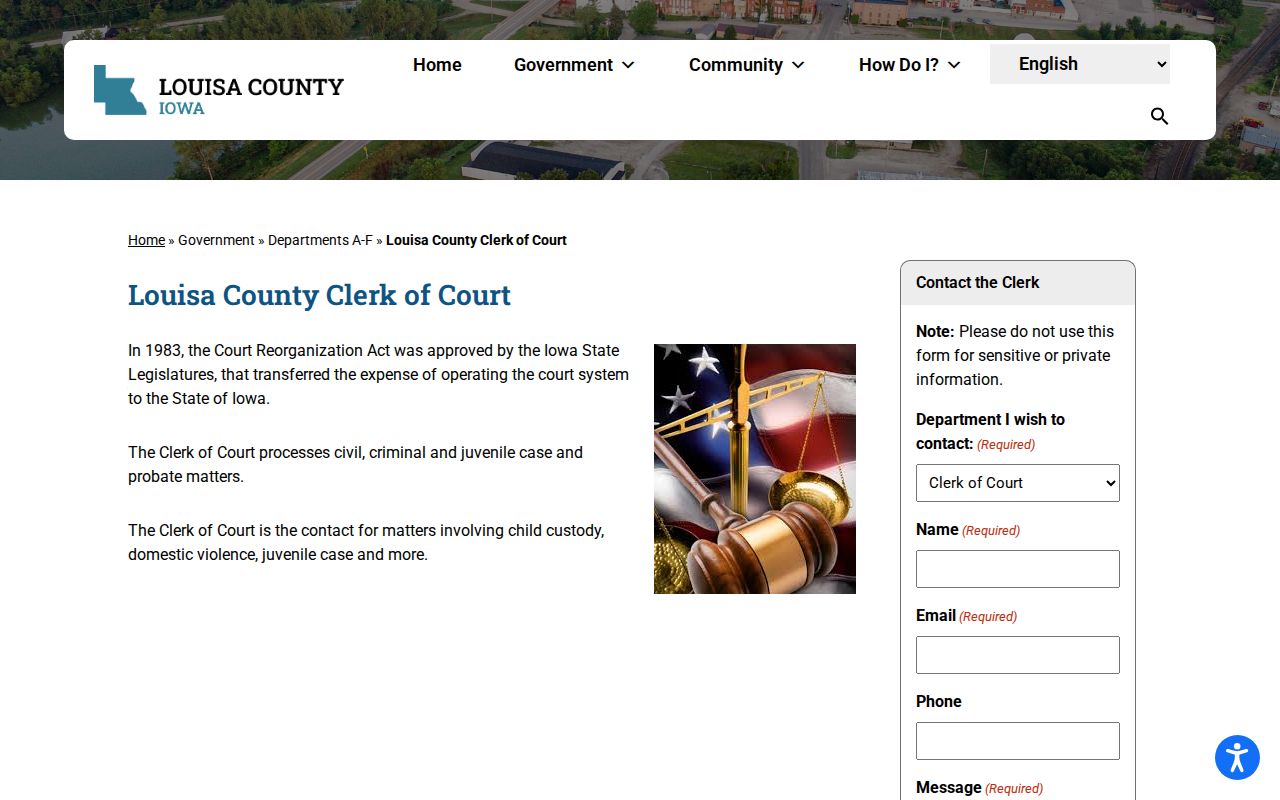
Use the clerk's copy when an online summary is unclear, incomplete, or not enough to establish the final case outcome.
Louisa Jail Records Through VINELink
Louisa County does not publish its own jail-roster interface or booking blotter. The official jail material routes custody checks to VINELink. That service supports person and custody searches plus notification enrollment, but it is not a full arrest report or court file. A new admission may take time to appear, so call the jail at 319-523-4371 when timing matters.
For releasable booking fields, ask the Louisa County Sheriff and describe the date range, person, arresting agency, and any booking or case number. Use a narrow Iowa Code chapter 22 request if the record is not routinely supplied. If the person has moved to state prison or community supervision, shift to Iowa Offender Search. Federal custody requires the federal Bureau of Prisons locator. Absence from one system does not prove release or the absence of a record.
Note: VINELink reports custody status and notifications; the Louisa County court disposition must be read from the clerk's official criminal case file.
Public Access Laws
Iowa law grants access to public records while protecting defined categories. Louisa County requesters may examine and copy open material, but active investigative facts, juvenile information, medical data, victim identifiers, presentence reports, deferred-judgment docket data, and unexecuted warrants can be confidential. Ask for nonconfidential portions when a full report cannot be released.
Key statutes:
Iowa Code chapter 22 grants access to public records and governs supervision, copies, fees, and confidential categories.
Iowa Code chapter 692 governs the state criminal-history repository, public dissemination, and correction.
Iowa Code chapter 901C sets Iowa expungement remedies for qualifying cases.
Iowa Code section 904.602 identifies public and protected corrections fields.
Iowa Code chapter 692A controls sex-offender registration and public registry disclosure.
The Iowa Open Records Law does not turn every law-enforcement file into an unrestricted public document. The record holder applies the law to the requested material.
Resolve Louisa County Warrant Records
Louisa County publishes no online active-warrant list, and Iowa offers no public statewide e-warrant name search. A missing web result is not clearance. Unexecuted search and arrest warrants are among the court records that may remain confidential. Bench warrants usually arise inside an existing court case, while arrest and search warrants follow separate judicial processes.
If a person believes a warrant exists, call counsel, the Louisa County Clerk, or the sheriff for safe procedural guidance. Search Iowa Courts Online for public entries in a known case, then ask the clerk to confirm what can be released. Do not rely on a third-party list or arrive without instructions. Resolution occurs through the issuing court. After the court acts, allow time for the docket and other official systems to update.
Note: The county alert service carries public-safety notices; it is not a warrant, jail, booking, or criminal-record search application.
Sealed, Expunged & Restricted
Iowa Code chapter 901C is the main Louisa County expungement route. It covers qualifying dismissed charges and not-guilty outcomes under section 901C.2. Section 901C.3 permits one eligible misdemeanor conviction to be expunged after more than eight years when statutory conditions are met, all court debt is paid, no charge is pending, and the offense is not excluded. Deferred judgments instead operate under chapter 907, and juvenile confidentiality follows chapter 232.
File in the county where the case arose through the Louisa County Clerk of District Court. Use the current Iowa Judicial Branch forms and identify the case precisely. The official county page does not publish a Louisa-specific filing fee, so ask the clerk about the current fee or waiver process. After an order, review Iowa Courts Online and obtain one's DCI record to confirm how the linked event is treated. Expungement generally makes the record confidential; it does not promise that every historical agency copy is physically destroyed.
Louisa Records Enter Iowa Corrections
A Louisa County record moves beyond the jail when a sentence places the person in state custody or community supervision. The Iowa Department of Corrections publishes Iowa Offender Search fields authorized by section 904.602, including name, age, sex, status, non-home location, supervision duration, offense, county of commitment, and physical description. Detailed supervision plans, treatment facts, and home addresses are not general public fields.
The Eighth Judicial District community-corrections page identifies the system serving Louisa County probation and parole supervision.
This district source helps route supervision questions, while the Louisa County court docket remains the place to confirm sentencing and any later revocation result.
Parole decisions come from the Iowa Board of Parole, and field supervision runs through corrections and community-based corrections. The Iowa Board of Parole publishes the official state parole channel.
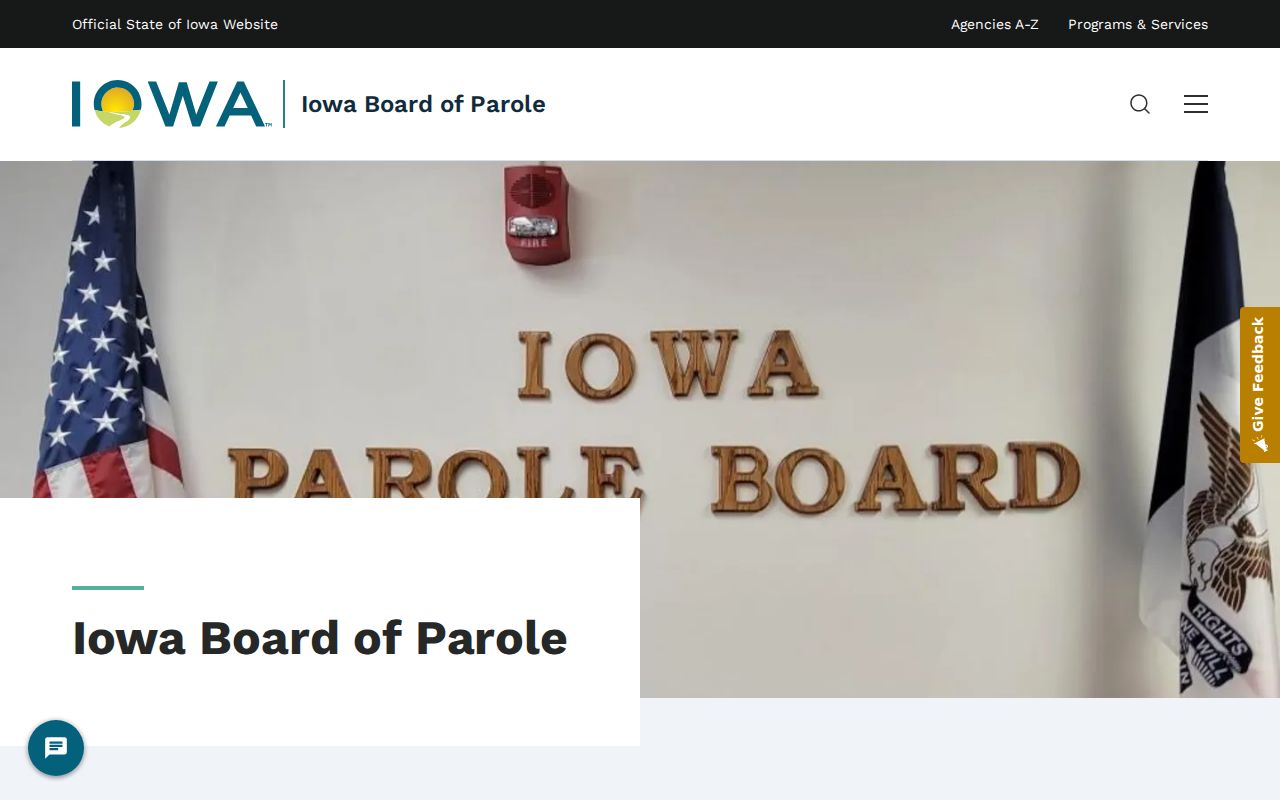
Use the board source for parole authority, then compare it with the court sentence and current corrections status.
Criminal Records by City in Louisa County
The three largest incorporated cities use different local record routes. Wapello and Columbus Junction have police departments that retain their own incident reports. Morning Sun relies on the Louisa County Sheriff for police service. Filed criminal cases from all three cities go to Iowa District Court rather than separate municipal criminal courts.
Wapello Criminal History
Population 2,084. City police reports, county jail bookings, and the Wapello courthouse are separate sources.
Columbus Junction Criminal History
Population 1,830. City police and clerk channels lead to county custody and District Court records.
Morning Sun Criminal History
Population 752. Sheriff records cover law enforcement, while City Hall keeps city administrative files.
Louisa County Court Record Timeline
Louisa County was formed in 1836, and Wapello became the county seat in 1839. The present 1928 courthouse is the county's fourth. Earlier records passed through a log building, an 1840 brick courthouse, and an 1854 stone courthouse made with stone quarried southwest of Wapello. That long chain matters when a case is too old for routine online coverage.
The official Louisa County history documents the present courthouse and the county's earlier court buildings.
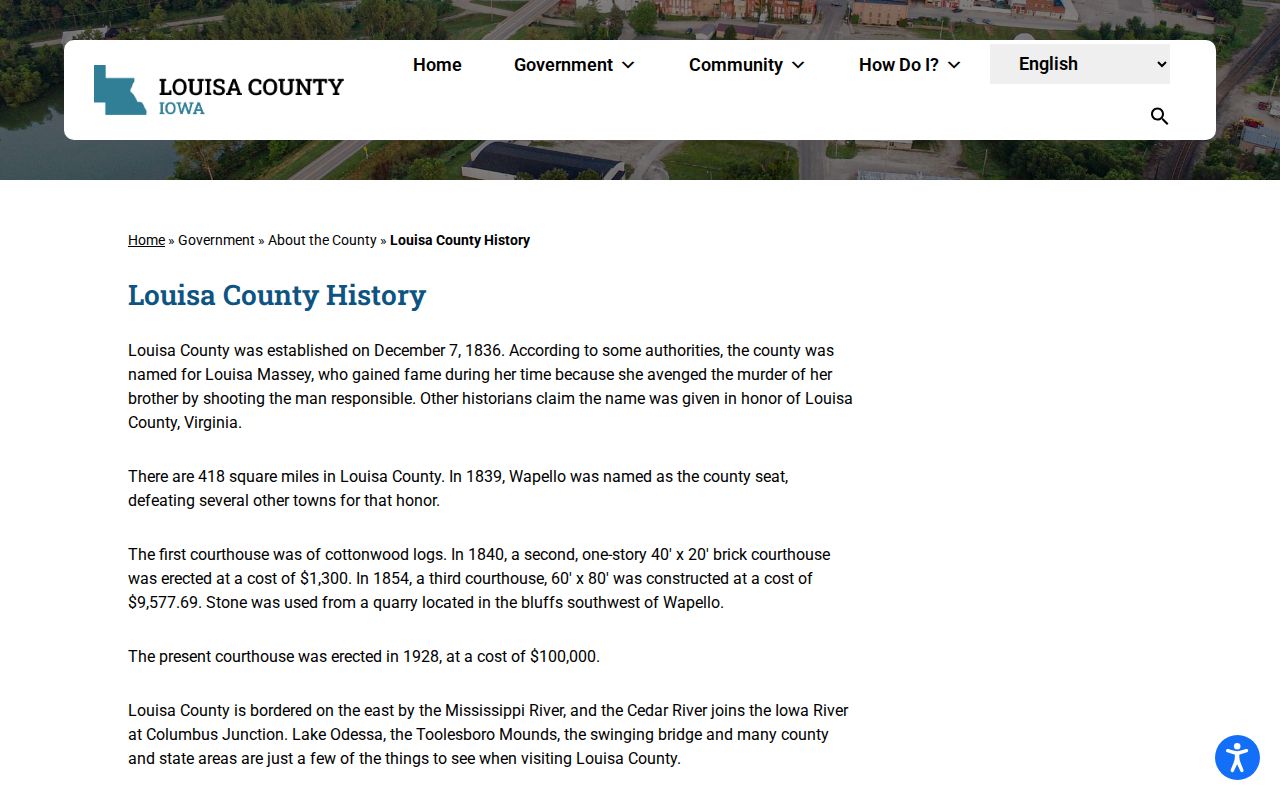
The current clerk can retrieve official digital, paper, or microfiche material, so an older Louisa County case that is absent online may still exist at the courthouse.