
Criminal Cases in the Louisa County Courts
Louisa County criminal cases are filed in the Iowa District Court for Judicial District 8B. Iowa has one unified District Court, not separate county felony, misdemeanor, and municipal criminal courts. District judges hear felony and major matters. District associate judges and magistrates handle the work assigned by Iowa law, which includes misdemeanors and initial appearances. A Wapello or Columbus Junction ordinance prosecution that becomes a court case also enters this unified system.
The Louisa County Clerk of Court is the official file custodian. The counter is on the courthouse second floor at 117 South Main Street, Wapello, IA 52653. Its hours are weekdays from 8:00 a.m. to 4:30 p.m.; call 319-523-4541 or fax 319-523-4542. The mailing address is PO Box 268. A west-side courthouse drop box offers an after-hours submission fallback, but confirm that a specific court filing may use it. The clerk, not the county recorder, holds criminal complaints, trial information, docket entries, orders, judgments, and sentencing documents. The prosecutor has a different role. The Louisa County Attorney decides which supported counts to file, while the court records what happens next.
Louisa County Unified Court Records
A common search mistake is looking for a city criminal court. Louisa County has no separate municipal criminal-case portal. The same Iowa District Court structure covers county prosecutions and filed city ordinance matters. That simplifies the search path, yet it does not merge every related record. A police incident report stays with the agency that made it. A jail booking stays with the Sheriff and jail. Only filed charges, hearings, motions, orders, and outcomes belong in the court case file.
This distinction matters when a booking label differs from the prosecutor's count. Booking charges reflect the asserted basis for custody at intake. The County Attorney may amend a charge, file a different count, or decline prosecution. The Louisa County court docket is the best place to identify what was filed. Read the final disposition before describing the outcome.
For a broader view of how those sources fit together, the Louisa County criminal history overview separates court, jail, agency, and DCI records.
How to Search Case Records
Start with Iowa Courts Online. Basic public case data can be searched statewide at no charge. Louisa County should be selected when the goal is a local case. Name spelling is important, and the official help permits a percent sign as a wildcard. For example, a search segment such as %dan can find names containing those letters. A known Case ID gives the most direct route.
- Open Iowa Courts Online and choose the public case search.
- Enter the last or firm name, then add the first and middle name when known.
- Select Louisa County and use case type, role, or date controls when the search mode offers them.
- Open the linked Case ID and read the counts, docket, schedule, and disposition.
- Contact the Louisa County clerk for documents, certification, restricted access questions, or an archived file.
The search form exposes the following fields. Some advanced views and document links need a subscription or access from a courthouse public terminal.
| Field Label | Type | Required | Notes |
|---|---|---|---|
| Last/Firm Name | Text | Yes for name search | At least two letters; percent wildcard is supported |
| First and Middle Name | Text | No | Do not put a period after an initial |
| AND/OR | Choice | Conditional | AND requires both names in a case; OR returns either |
| Case ID | Text | Alternative | Use the full identifier for a direct search |
| County | Dropdown | No | Select Louisa for county results |
| Case Type and Role | Dropdown | No | Narrows the result set where exposed |
| Date Range | Date fields | No | Advanced or schedule modes may require access |
The official Iowa Courts Online interface shows how the statewide search begins.
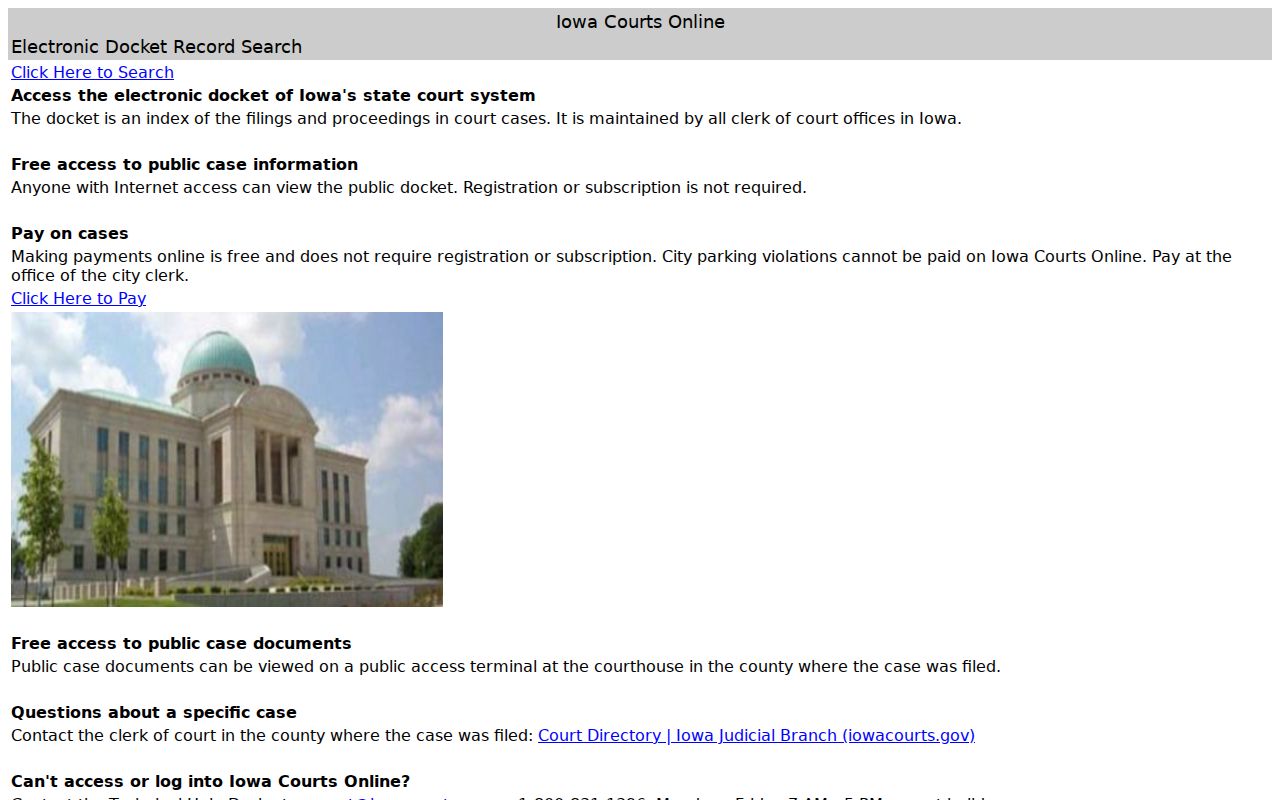
That first screen is only the index route. The clerk remains the source for an official Louisa County case document.
Louisa County Docket Access Levels
Free public access and document access are not identical. A basic result may show the Louisa County Case ID, parties, charge lines, status, docket events, and schedule. Some unbracketed document links work only for registered subscribers or from a clerk-office public terminal. Registered users can also obtain Schedule Search and Trial Court Advanced Case Search. Registration is not required merely to pay a court debt.
When a document is unavailable online, call the clerk with the Case ID. Ask whether the file is digital, paper, microfiche, archived, or restricted. The Judicial Branch publishes a general copy charge of $0.50 per page and may assess supervision or special-service charges. Confirm the current total before ordering. The clerk can also explain certified-copy options. If a confidential item appears online, the user agreement directs the viewer to report it at once to Judicial Branch support or the clerk.
Note: Search results are a finding aid; a certified Louisa County court record comes from the clerk who keeps the original case file.
What the Case File Shows
A Louisa County case file records the prosecution from filing through outcome. The header identifies the court, county, case type, filing date, and status. Party entries show the State of Iowa, defendant display name, and attorneys with their roles. Charge rows should be read count by count because a single case can end with different results for different allegations. Docket entries then place complaints, motions, pleas, hearings, trial events, orders, judgment, and sentence in time.
| Case ID and Court | County, court, case type, filing date, status, and identifying number |
|---|---|
| Charging Document | Complaint, trial information, or indictment and the counts filed |
| Charges | Description, Iowa statute, level, amendments, and disposition by count |
| Docket Entries | Appearances, motions, orders, pleas, trial, judgment, and satisfaction entries |
| Schedule | Public event date, time, courtroom, and judicial officer when published |
| Financial Record | Fines, surcharge, costs, restitution, payments, and balance as exposed |
| Disposition and Sentence | Dismissal, acquittal, deferred judgment, conviction, penalty, and conditions |
The judgment and disposition answer a different question from the arrest report. They show whether the filed count ended in dismissal, acquittal, deferred judgment, or conviction. Financial fields may change as payments post, so note the date viewed.
Louisa County Criminal Case Codes
Iowa case-type abbreviations help identify the level of a Louisa County file. FECR commonly marks a felony criminal file. AGCR, SRCR, and SMCR commonly refer to aggravated, serious, and simple misdemeanor files. OWCR is used for an operating-while-intoxicated criminal file. A code sorts the case. It does not prove guilt or tell the final result.
- Disposition
- The procedural result for a count or case. Read each count separately.
- Arraignment
- The hearing where the charge is formally presented and a plea is taken.
- Deferred judgment
- An Iowa process that delays entry of conviction judgment during probation.
- Mittimus
- A court order that directs custody or commitment.
- Docket
- The dated index of filings and court acts, not every document itself.
A dismissal ends a charge without conviction on that count. An acquittal is a not-guilty decision after trial. A deferred judgment is different from both and may receive restricted public treatment. The actual docket and order control.
Stages of a Criminal Case
A Louisa County criminal case starts when a complaint, trial information, or indictment is filed, not when a booking screen appears. The first court events address the allegations, rights, custody, and release. Arraignment places the charge and plea on the record. Pretrial work can include discovery, motions, negotiations, and hearings. The case may then resolve by plea or trial. A disposition records the result, and sentencing follows a conviction when it is not imposed at the same event.
Case flow: Charges Filed › Arraignment › Pretrial › Plea or Trial › Disposition › Sentencing
Bench warrants may arise within that path after a failure to appear or alleged supervision violation. Unexecuted warrants are not public search items. Once a warrant is executed, related docket entries may become public unless sealed or otherwise protected. For a possible warrant, seek safe instructions from the clerk, counsel, or Sheriff rather than assuming an empty search means none exists.
Louisa County Criminal Charging Records
The Louisa County Attorney prosecutes state-law and county-ordinance violations. The office is at 326 Van Buren, PO Box 247, Wapello, IA 52653, and may be reached at 319-523-3331 on weekdays from 9:00 a.m. to 5:00 p.m. The prosecutor evaluates the law and evidence before charges are filed or amended. That work explains why a jail intake charge may not match the later court count.
The official County Attorney page publishes the local office and service information.
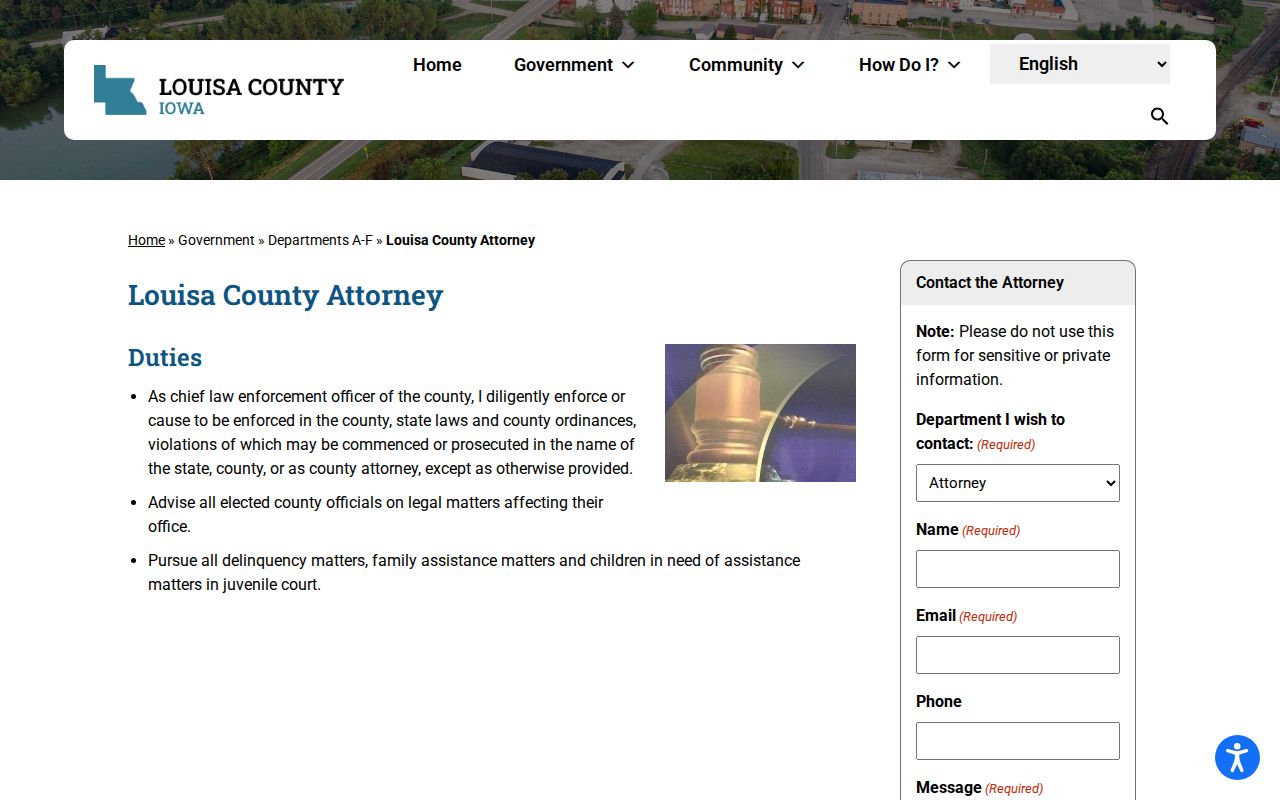
The office participates in prosecution, but it does not replace the clerk as custodian of the Louisa County court case file. Victim services and defense files also follow their own protected channels.
Louisa County Federal Court Cases
Some conduct tied to Louisa County may be prosecuted in federal court. The county lies in the Eastern Division of the U.S. District Court for the Southern District of Iowa. Those files do not appear as state District Court cases, and the Iowa DCI public product excludes federal convictions. Search the federal layer separately when the known agency, charge, or court is federal.
PACER is the official federal docket and document system. It requires an account and applies its current usage-fee rules. Search by court and party, then confirm the case number before opening billed pages.
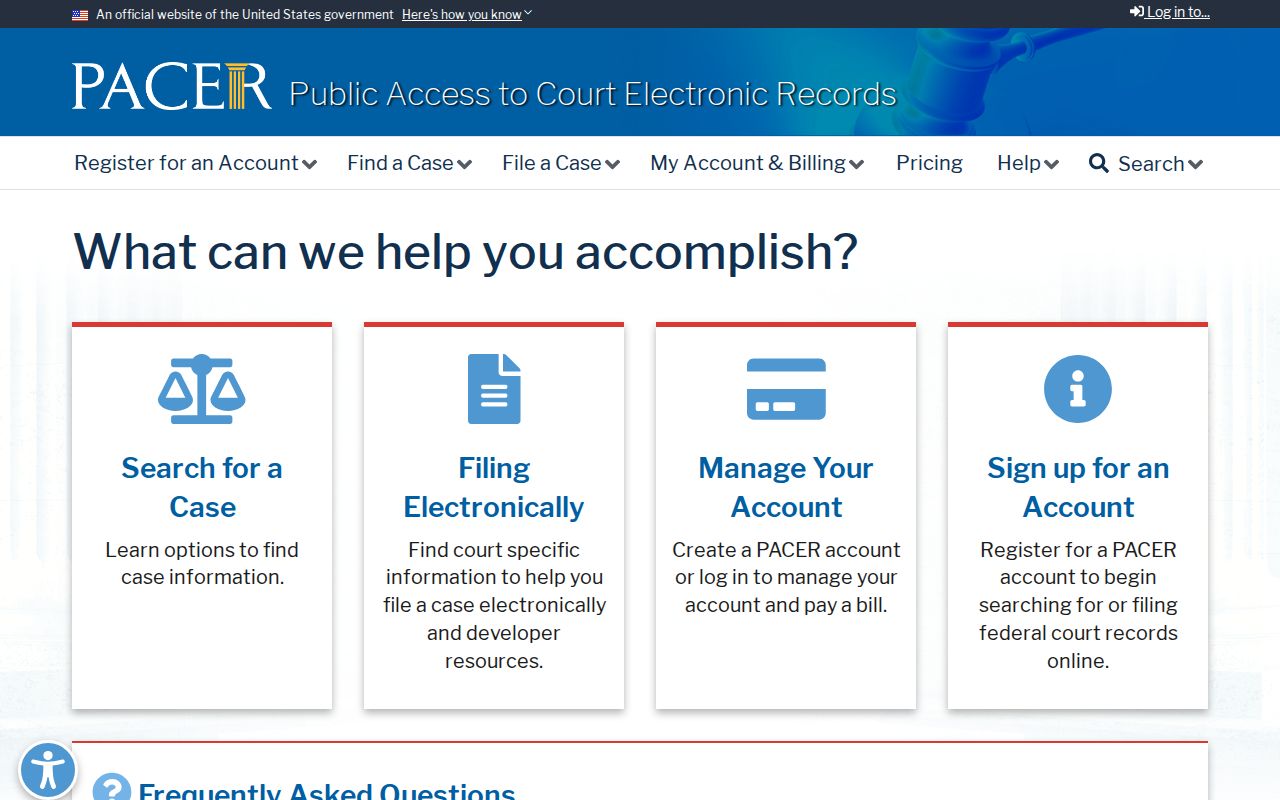
PACER complements Iowa Courts Online. It does not hold Louisa County Jail records, Iowa District Court documents, or the clerk's state case file.
Access & Restrictions
Iowa Code chapter 22 supplies the state's open-records framework, while court access also follows statutes and Iowa Court Rules chapter 16. Public access does not make every filing open. Protected identifiers, victim or minor information, presentence investigation reports, confidential juvenile cases, sealed matters, deferred-judgment docket information, and unexecuted search or arrest warrants may be withheld or redacted.
Online redaction can make the public view narrower than the official file, but the clerk cannot release material that the law closes. If a Louisa County case does not appear, verify the spelling and county, try the Case ID, and ask whether the record is archived or confidential. A missing result is not proof that no court record exists. If the issue is incorrect data in one's own record, compare the clerk's judgment with the DCI event and use the custodian's correction process.
Public-record boundary: Iowa Code chapter 22 supports access to public records, but confidentiality rules still protect listed court and personal information.